Adjusting in Degrees
Applying Atomic Habits to organizational transformation initiatives
By Laura Nelson-Hamilton and Nick Scott
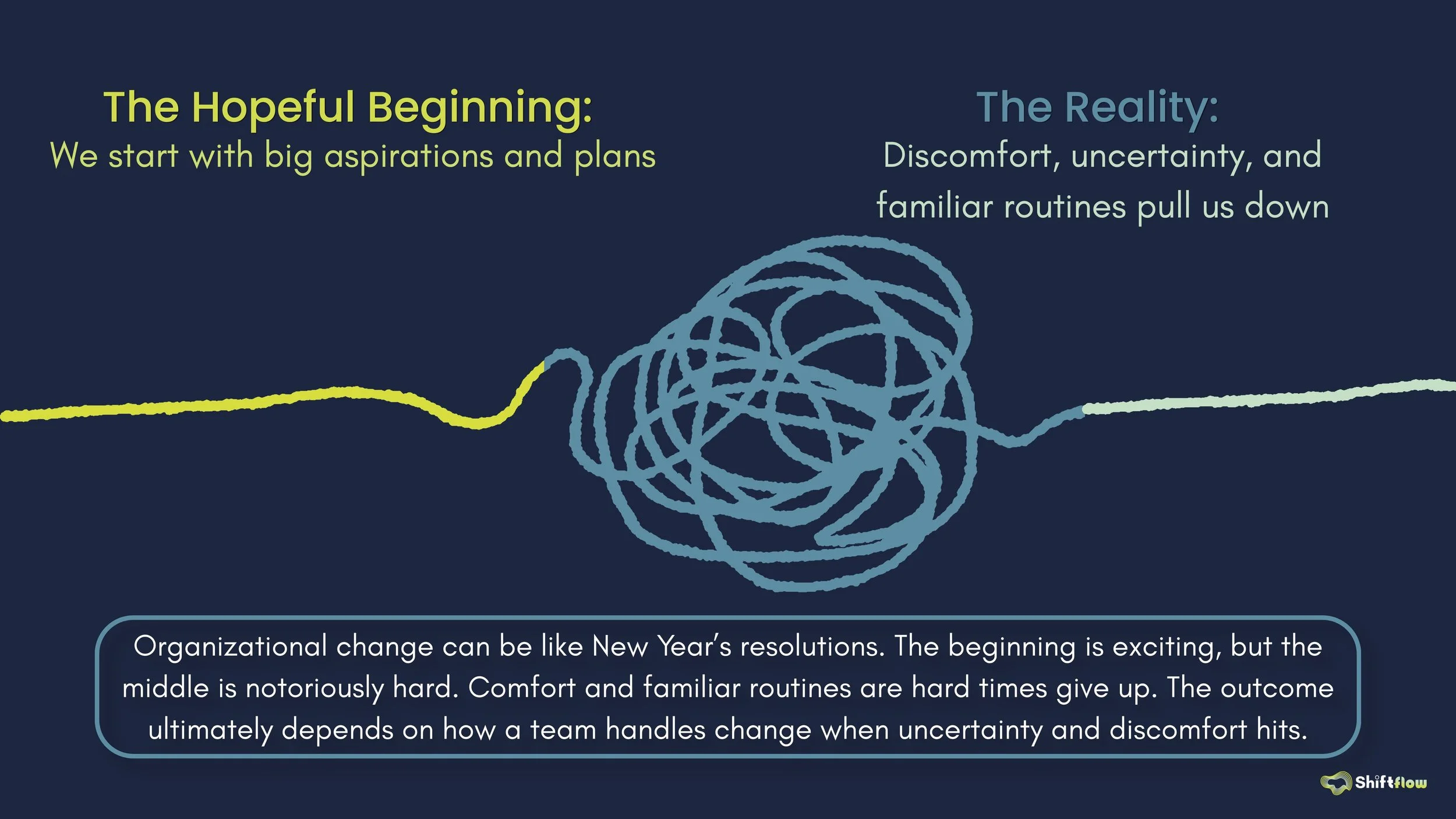
By the time you read this, you might have made a New Year's resolution and given up on it already. We often start each year with big plans, but then we find it hard to stick to them. Even if our usual habits and behaviours aren’t ideal, it's easier to stay with what we know than to try something new. Comfort and familiar things can be hard to give up. Trying new things can be tough because of uncertainty.
There’s a similarity between our personal resolutions and changes within big organizations. The beginning is exciting, but the middle can be really hard. The outcome depends on how the team handles change and if they can keep hope when things get tough. Can they embrace discomfort?
In this article we explore James Clear's Atomic Habits and how the insights shared in his book can be applied to organizational transformation. We think teams are like a system, and shifting their habits are important in embedding change over the long-term.
Team as aystem; habit as unit of change
James Clear wrote Atomic Habits in 2018, and it became the best selling book on Amazon within a few years. He talks about how systems enable transformation, which drew us both in given our interests in systems change.
A Tree as a metaphor for systems change
What we know through our work is that systems change is really difficult. There are so many demands, it seems never-ending, and it can appear futile at times. The following image, first shared by Systems Innovation, demonstrates what systems change is so hard.
As represented in the image of the tree, what we see when it comes to systems are the leaves, with a lot going on under the surface. Beneath the earth, the tree’s roots symbolise the complex reality of incentives, power dynamics, organizational politics, money and habits underpinning the system. Pulling on the tree represents the linear approach to change typically adopted by many.
The idea of looking at something as small as habits as systems change work seems revolutionary to us. We tend to centre the team as a system, and within that we often overlook small units of change, which Clear comments on:
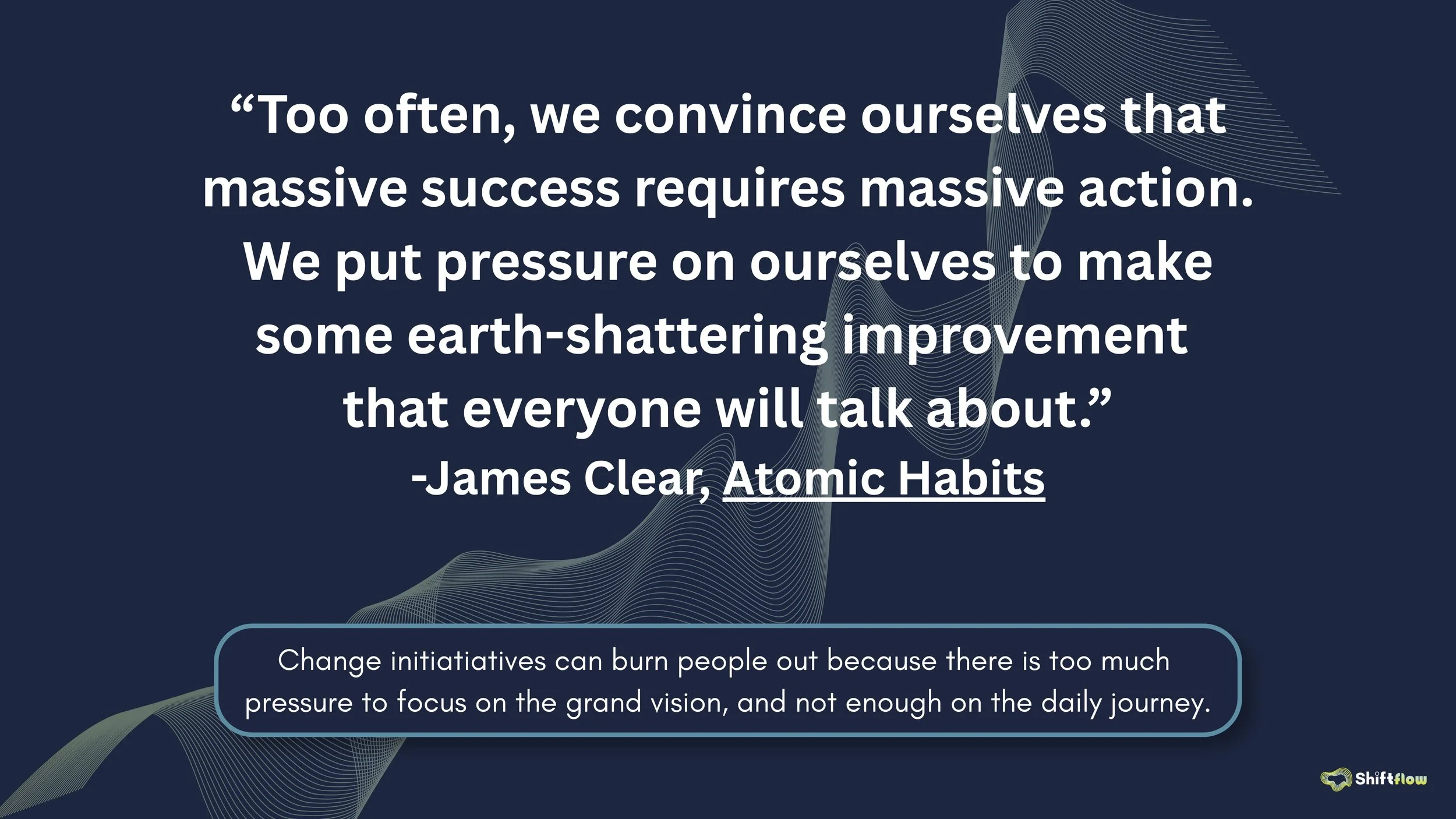
“It is so easy to overestimate the importance of one defining moment and underestimate the value of making small improvements on a daily basis. Too often, we convince ourselves that massive success requires massive action. Whether it is losing weight, building a business, writing a book, winning a championship, or achieving any other goal, we put pressure on ourselves to make some earth-shattering improvement that everyone will talk about”
Transformation projects are especially hard on the people involved because there's too much focus on the end goal and not enough on the journey to get there. We believe that teams' habits are crucial for change and are how transformation happens.
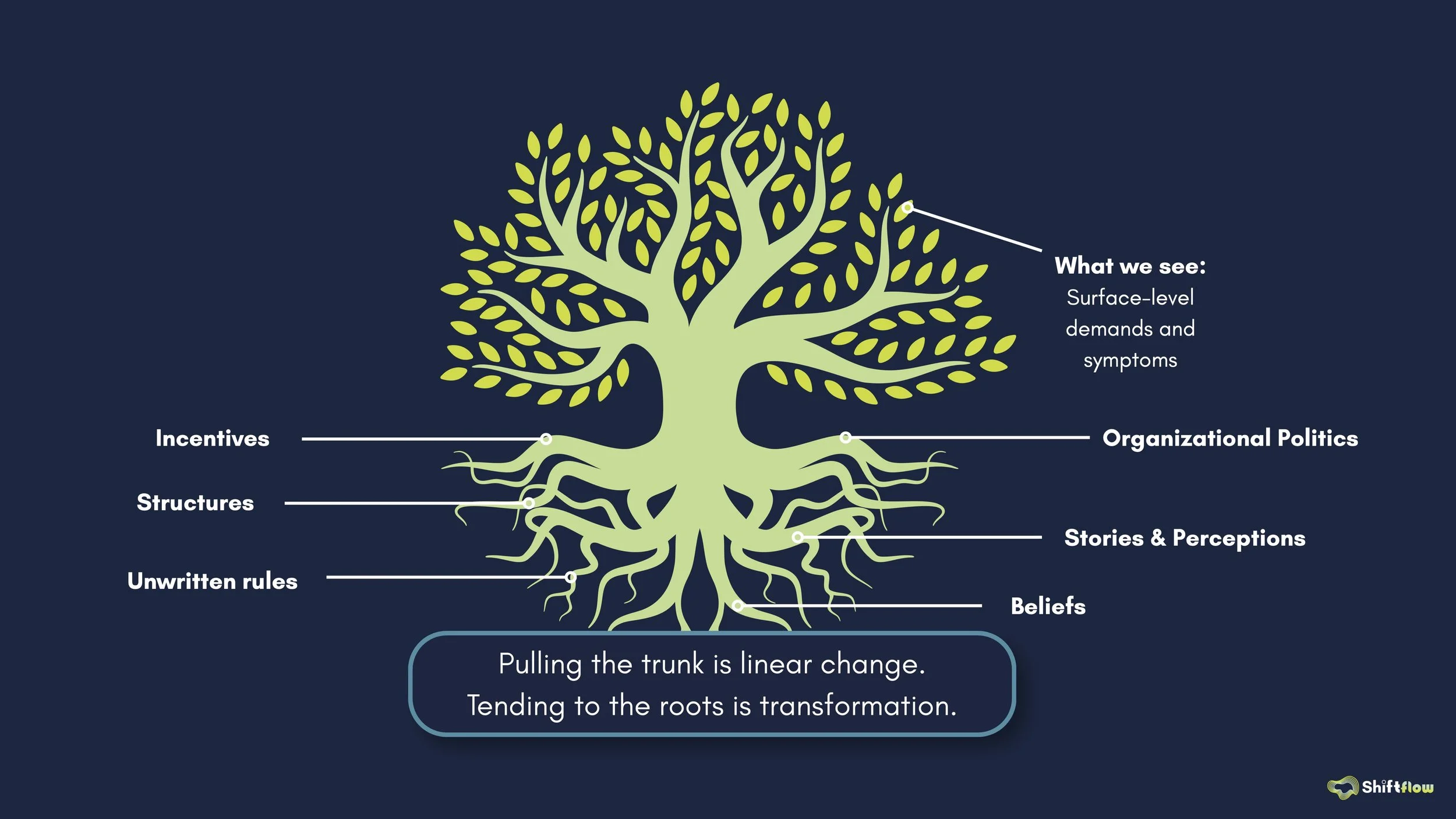
Systems change represented by people pulling at the trunk of a tree
We should give more attention to teams and their habits to enable transformation
Teams need habits that help them continuously learn about the broader systems they work in. They also need habits that let them notice the small changes along the way. Habits can also help teams stay focused on their goals and build trust while they go throughout a transformation journey.
Some examples of habits teams might consider embedding in their work include:
Ongoing discoveries: constantly probing and questioning systems to understand them better and develop insights that can help shape and frame next steps and actions
Routine retrospective conversations: having regular meetings where team members can talk about how they're doing and what they're learning
Reflecting on individual actions: gaining awareness of personal patterns and how they impact those around them, to increase individual accountability and continuously create conditions that enable mutual success
Frequent check ins with leaders: to get advice and ask for help with unblocking persistent challenges, to create systems of reciprocity and enable affirmation
It's important not to overlook the “smallness” of organizational transformation in favour of the grandness of the undertaking. Clear makes this observation in the context of changing personal habits:
“We often dismiss small changes because they don’t seem to matter very much in the moment. If you save a little money now, you’re still not a millionaire. If you go to the gym three days in a row, you’re still out of shape. If you study Mandarin for an hour tonight, you still haven’t learned the language. We make a few changes, but the results never seem to come quickly and so we slide back into our previous routines.”
Because change happens by degrees, leaders must also invest themselves in the creation of systems and habits that enable change. At times, their own patience will be required to help teams see change and continuously pursue it.
Transformations fail when overarching conditions like mandates or funding change. But they can also fail when the conditions that enable ongoing change are not nurtured. When those leading the transformation do not support the success of teams making change on the frontline.
Leaders can support and enhance the ability of teams to deliver small units of change by:
Asking to see learnings the team generates through ongoing discoveries
Participating in retrospective conversations
Training themselves to notice small changes and celebrate small wins
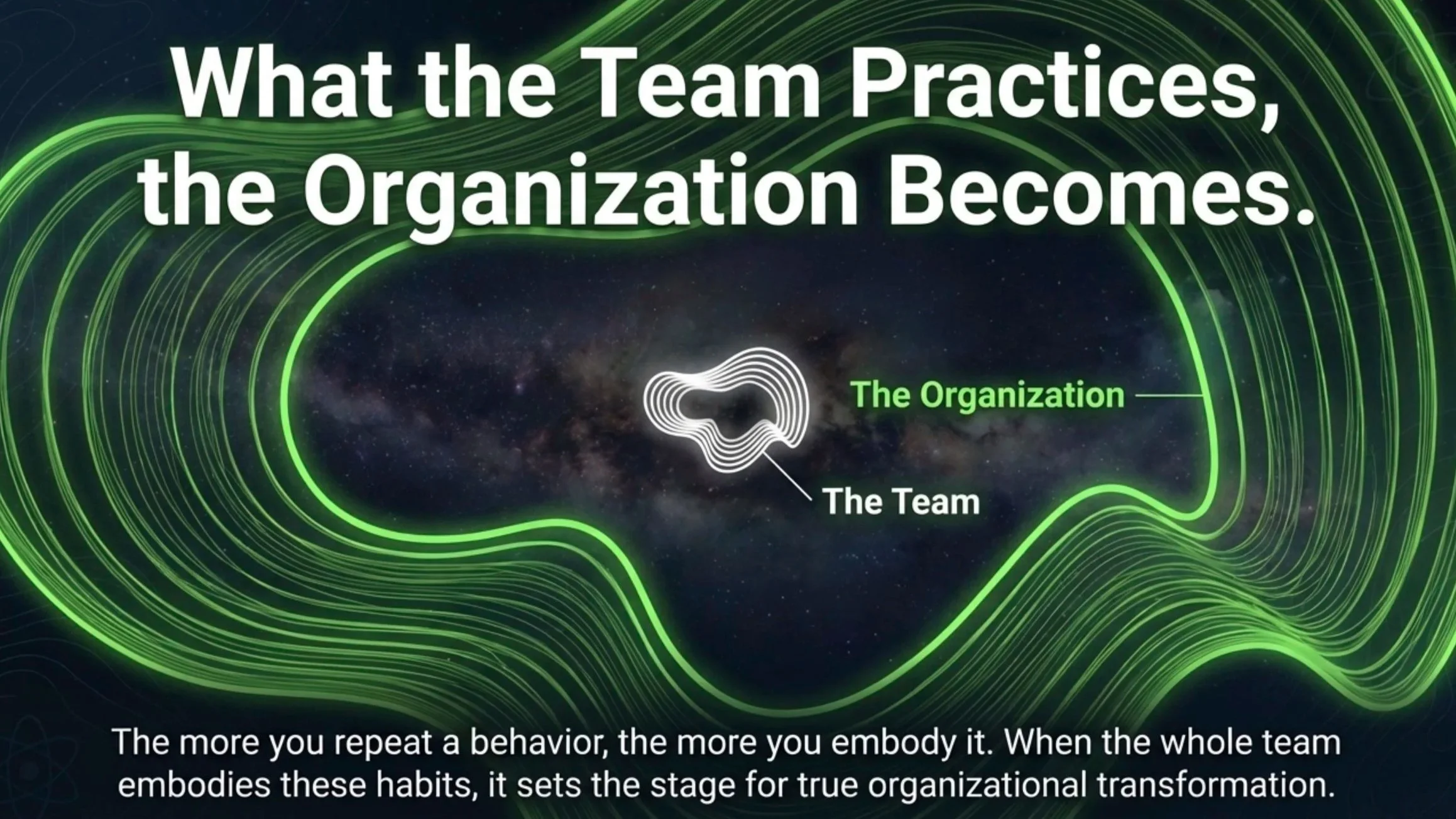
What the team practices, the organization becomes
With the support of leaders, teams can practice new modes of interacting and working together that reflect the future organization they are striving for.
However, the team's influence on the organization depends on how much encouragement they receive from leaders during the change process. This shapes the quality of their work and their ability to maintain consistent effort over time.
Teams that regularly practice being open and reflective show us that the more you repeat a behaviour, the more you embody it. When the whole team embodies these habits, it reflects in what the entire organization becomes.