
How It Got Fixed: Report Out from a GovMaker Workshop
So, you’ve got more than a hundred cross-sector changemakers in a room — what do you do?
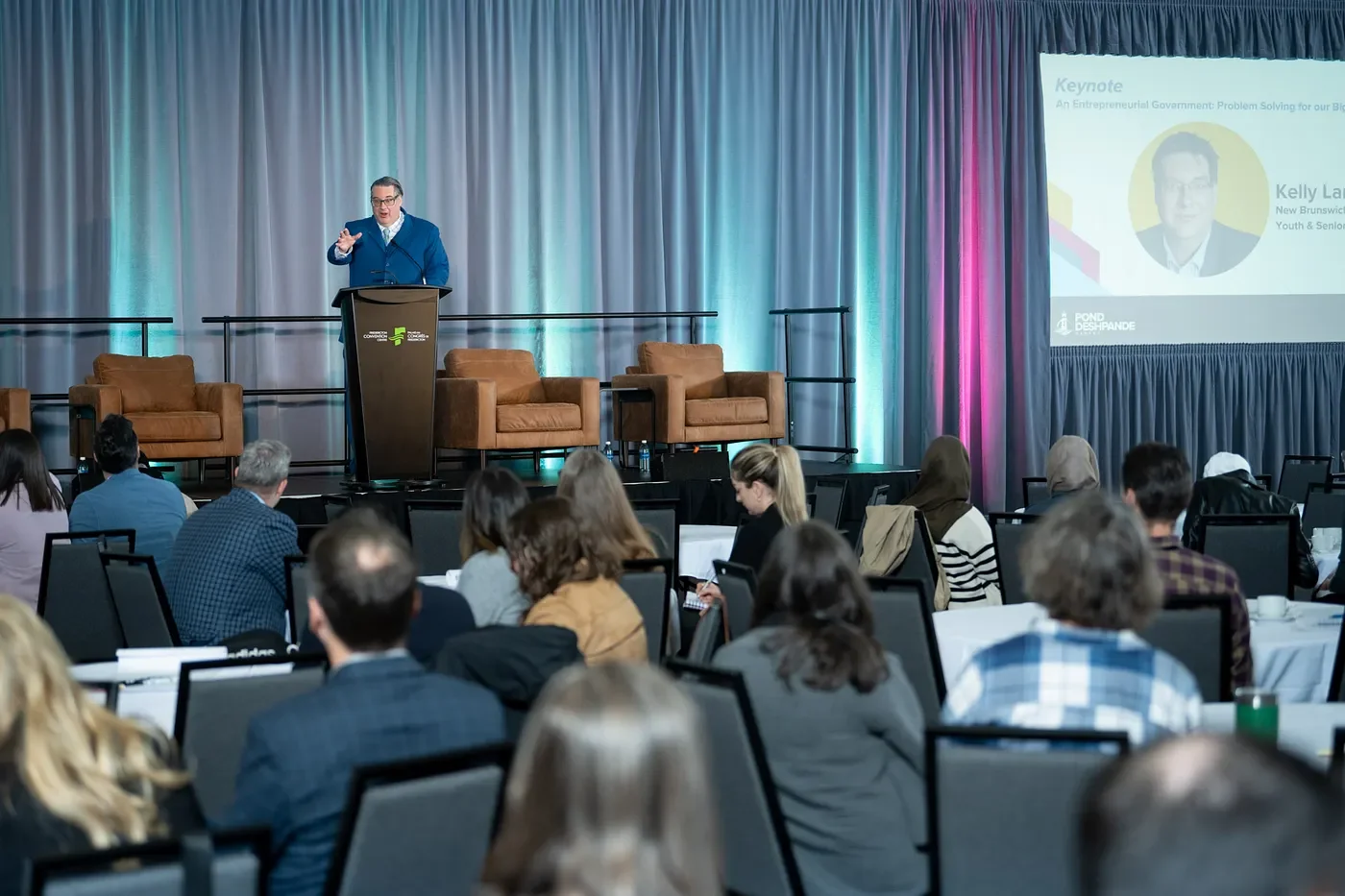
In November 2024, I had the opportunity to design and facilitate a one-hour workshop at the GovMaker Conference. This session followed an inspiring keynote by Kelly Lamrock, New Brunswick’s Child, Youth, and Seniors Advocate and the author of the How It All Broke report. Lamrock’s report didn’t just highlight the cracks in our systems; it laid out bold recommendations for a Reinventing Government Initiative (ReGo). After publishing this thought piece in October 2024, I was thrilled to bring some of those ideas to life, even in a small way.
The Challenge
Our guiding question for the workshop was simple but huge:
How might we implement or support the ReGo recommendations from the How It All Broke report?
With just an hour, I wanted a format that would maximize creativity, participation, and tangible outcomes. I opted for a combination of liberating structures and one of my favourite ideation exercises. Liberating Structurescan be designed to allow large groups to get a lot done in a short period, providing the perfect framework. You can download the slides and instructions here.
The Gap First
Before I describe what worked, I want to name what didn't, because it shapes how you read everything else.
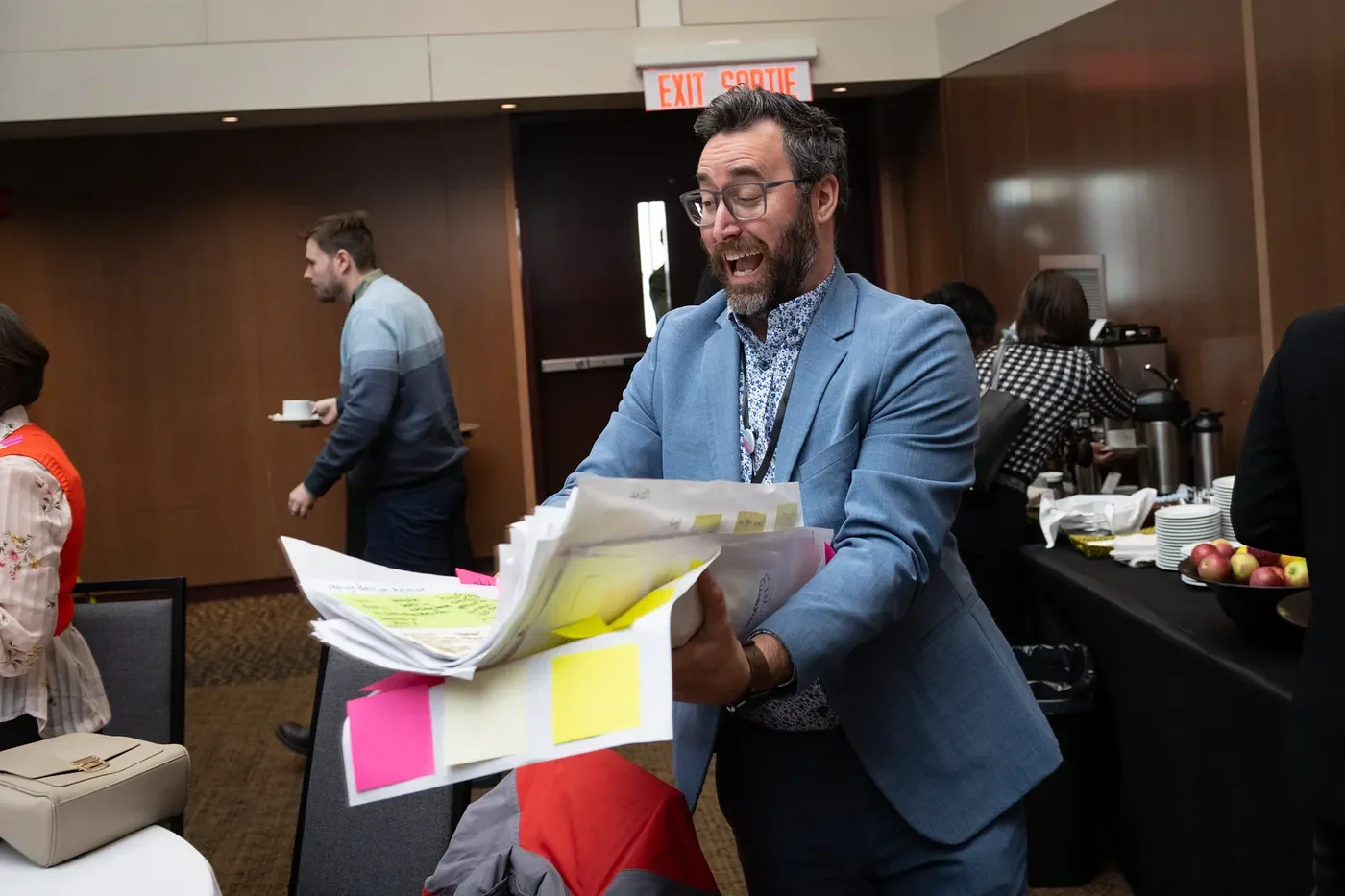
The session ended at the harvest. 934 ideas captured. 39 strategies synthesized and shared. And then people got on their flights home.
That's not a facilitation footnote. That is the central problem. The root sits with leadership and receptor capacity, well upstream of participant engagement or idea quality. As someone outside government, I was “just a boy who loves policy” (as I told the audience) without authority to name a handoff or assign a mandate. That responsibility belongs to institutional leadership: confirming in advance who would receive the output, identifying who in the room carried institutional authority versus personal enthusiasm, and building a named pathway to action. The session produced ideas. The system needed receptors to catch them.
Here's the harder question the design should have started with: who do you invite, what mandate do they carry into the room, and have you negotiated with conference organizers — who mostly want an energetic session — to protect space for something more binding than inspiration?
If that pre-work isn't done, a commitment round at the end is still theatre. You're harvesting intentions, not ownership. I'll say more about what I'd do differently. But I wanted you to hold that gap as you read what follows.
The Activity
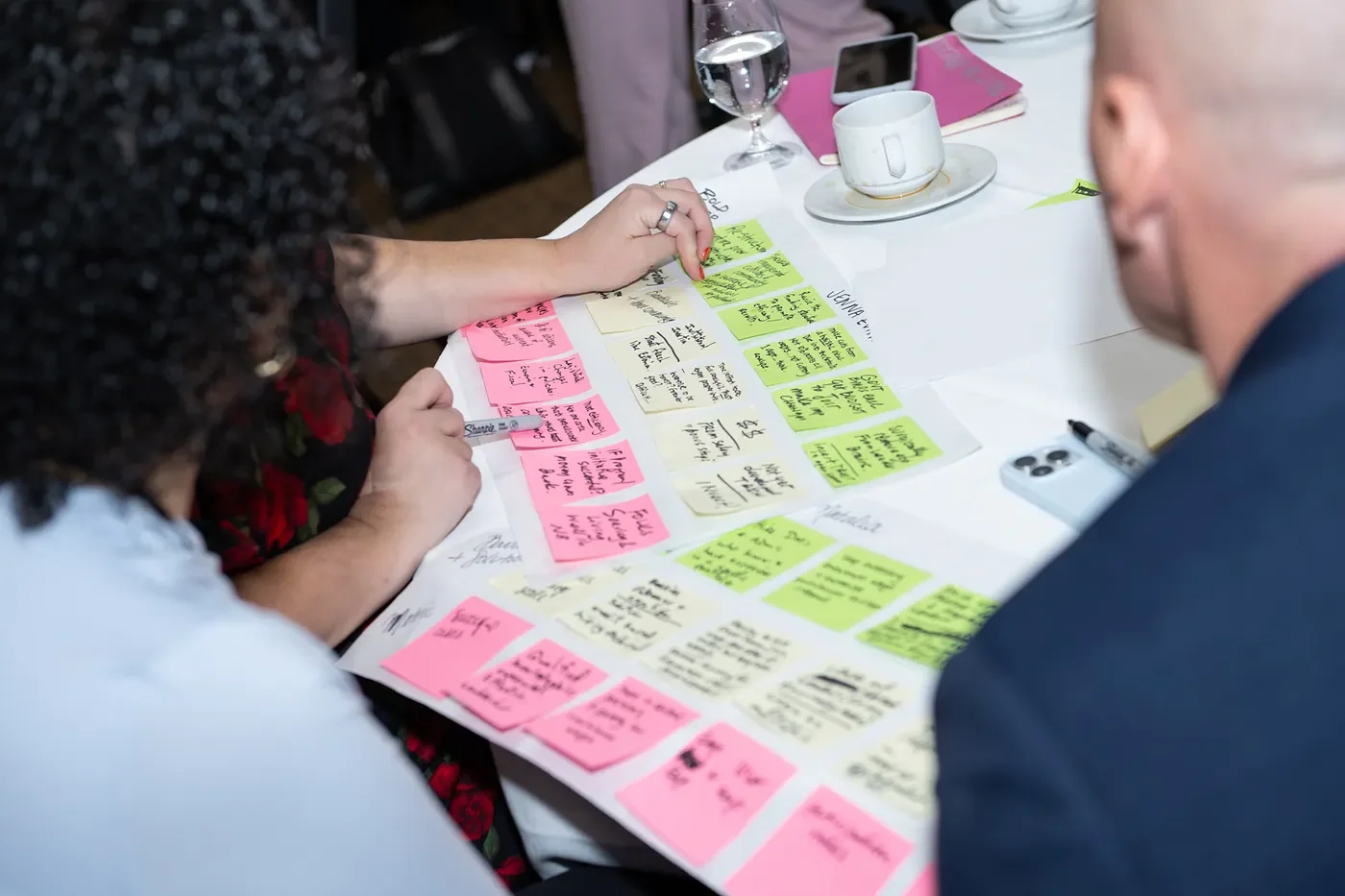
For this session, I combined Brainwriting with 1–2–4-All. Here’s how it worked:
Step 1: Brainwriting
Participants began with a sheet divided into three rows, each representing a key question:
What bold step could we take to transform services for people?
What barriers might we face, and how might we overcome them?
What outcome metrics could measure success?
Each person wrote one idea per row, then passed their sheet to their neighbour. The next participant reviewed the ideas and either built on them or added a new idea. This process repeated until the sheets returned to their original owners.
Press enter or click to view image in full size
Step 2: Reflection and Synthesis
After reflecting on their sheets, participants formed small groups (diads or triads) to synthesize their ideas into strategies using a structured mad-lib template:
“Our bold step is to [insert bold step], which aims to [insert intended impact or outcome].
We recognize that a key barrier to success is [insert barrier]. However, we propose overcoming this by [insert solution], leveraging [insert resources, partnerships, or strategies].
To measure our progress, we’ll use [insert key metric], which will help us track [insert what the metric evaluates or ensures].”
Step 3: Plenary Sharing
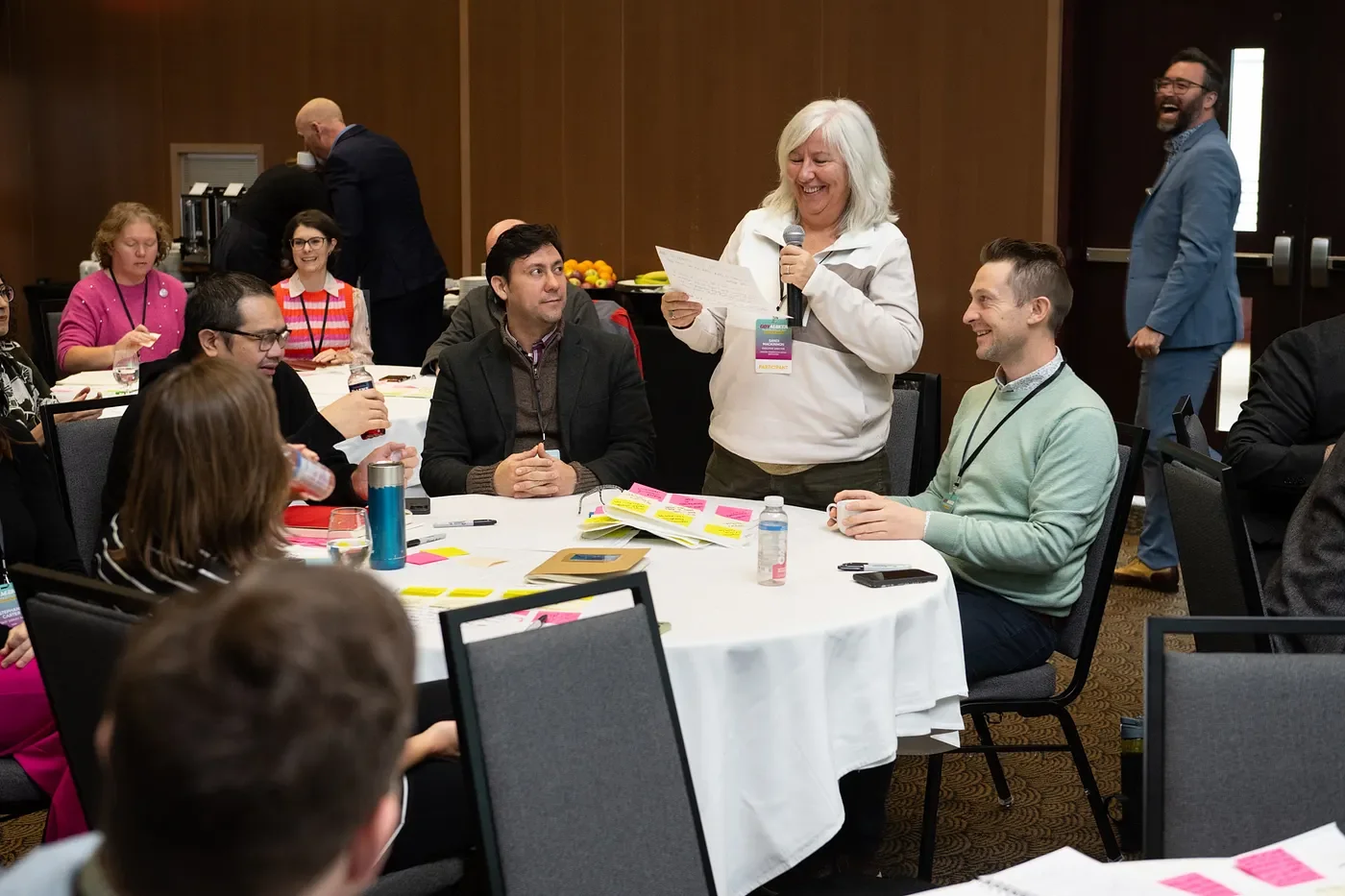
Each table then presented its synthesized strategies to the larger group, sharing its creative approaches and solutions.
The Results
In just one hour, our group of ~150 participants generated:
934 ideas (322 bold steps, 308 barriers/solutions, and 304 metrics)
39 synthesized strategies shared during the plenary session
Using Miro’s Stickies Capture feature, I transcribed and organized the ideas by colour-coded categories and exported the data into a CSV file. With the help of ChatGPT, I conducted a thematic analysis and refined the results. While some categories still need further cleaning, this first pass revealed was a great start. You can download the file here.
Highlights
We generated an overwhelming amount of content, but several themes stood out. Here are some of my favourite takeaways and bold ideas:
Align government departments, branches, and units around citizen service journeys rather than bureaucratic silos. For example, life-events-based service delivery could transform reactive, fragmented systems into integrated, user-focused experiences.
Establish citizen-led task forces and co-design services with those directly impacted by policies. Increase engagement with non-profits to report and address systemic gaps.
Innovation isn’t just about technology — it’s about culture. Create spaces for innovative thinking in social services, adopt design-thinking approaches, and build civic data literacy through iterative, problem-based learning.
Enable social service agencies and frontline workers to participate in decision-making while ensuring strategic oversight. Empower local expertise to drive both immediate practicality and long-term impact.
What I'd Do Differently
The fix is not a follow-up survey. A commitment round alone won't do it either. Without pre-design, that round collects intentions from people who may have no authority to act on them.
For this to be more than a demonstration of a generative exercise, the real work happens before anyone walks into the room. It means identifying who carries an institutional mandate, not just personal interest. It means confirming that the person holding the ReGo mandate is present, briefed, and ready to receive the room's live input into their work.
The ReGo recommendations are not waiting for more ideas. They already exist. What's waiting is ownership. And ownership has to be designed in, not hoped for.
